
$79.99
Cat furniture
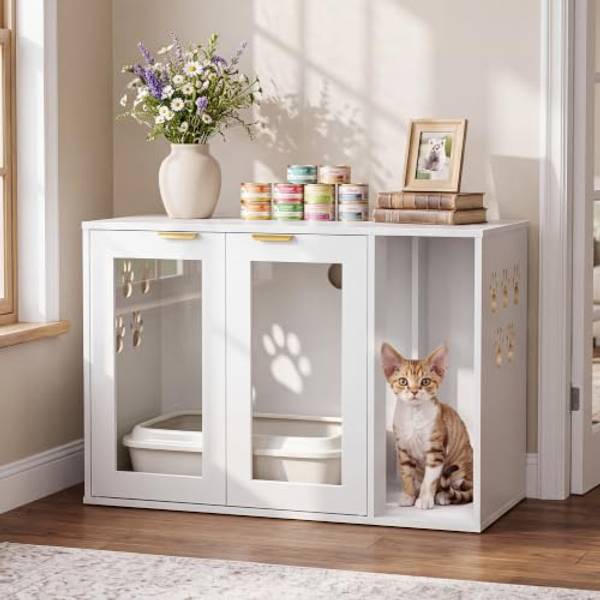
A litter box is the one piece of pet equipment nobody wants in the open. A cabinet solves that only if the cat agrees with the entrance and you can still reach the tray.
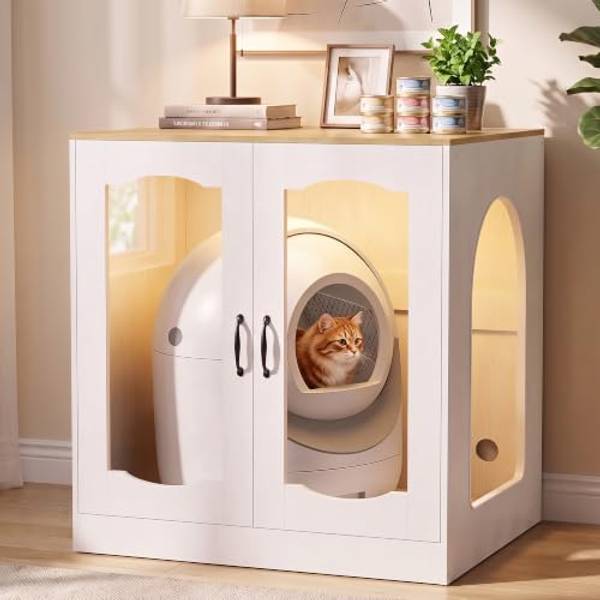
Start with the box you already own, lid included if it has one. Length, width and the height the cat has to clear to step in. A cabinet drawn for a standard tray will not take a hooded one, and that is the single most common mismatch on this shelf.
Then the cat. A side entrance wants a cat that can step up and through without crouching, which large breeds and older cats do not always do gracefully.
The side passage belongs to the cat. The front door belongs to you, and it is the one that decides whether scooping is a two-minute job or a chore with a kneeling part.
One of the cabinets here wears a clear front panel, which lets you see the state of the tray without opening anything. The rest keep the whole business behind wood.
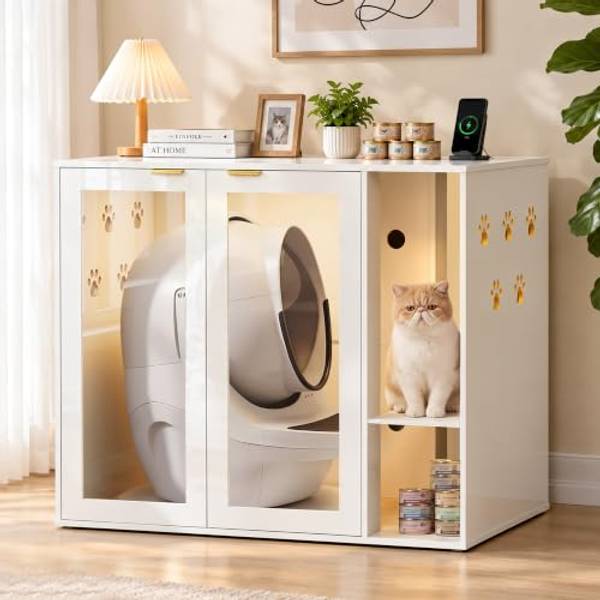
Self-cleaning boxes are taller and deeper than a plain tray, and they need a cord. The widest cabinet on this shelf is drawn around that, with the interior height to clear the dome and a way out for the cable.
If an automatic box is in the plan later rather than now, buy for the later one. The cabinet outlives the tray inside it.
The flat top is the reason these pieces pass for furniture, and it does take a lamp, a plant or the brush and bag. Keep the load light and keep it off the half that lifts, if the cabinet opens that way.
Litter that leaves on paws stays on the top step and inside the panel instead of the hallway, which is most of what the cabinet was bought for.
$79.99
5.03 ratings
$123.49

5.02 ratings
$49.99
$169.99